Opti-maxxing sucks. Let’s talk about it.

Trust me when I tell you: I am an ambitious gal.
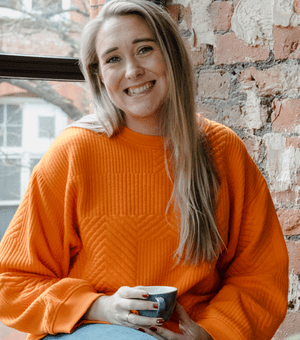
Eldest child. Capricorn. Old soul. Offspring of hardworking and hugely inspiring parents. World traveller. Twin Mum. Self-employed and running businesses for more than 15 years.
I have boldly stepped towards change, challenge and evolution more times than I can count.
Not because I have discovered some magic secret to life.
Side note: how boring would it be to hack everything into tedious simplicity? Where is the fun in shortcutting the experience? What destination are we all so keen to rush towards anyway?
I step towards change because I understand that challenge, uncertainty and evolution are all part of the human experience.
Life might shape you.
Shatter you.
Stretch you beyond what you thought was possible.
But that is, in many ways, the point.
I accept the full spectrum of my human experience in this lifetime.
I work hard to remain hopeful, even in difficult seasons, because I know the sun will come up again tomorrow.
Sometimes I am on top of the world. Sometimes I am dragging myself through the weeds.
At all times, I am here. I am breathing. I am doing my best. And that should count for more than our culture currently allows it to.
THE RISE OF OPTI-MAXXING
It has been a risky few years for ambitious people and our sanity, thanks to the slow rise of what I call “opti-maxxing”.
It is my catch-all term for the endless optimisation and “maxxing” narratives that have become so prevalent in our culture.
Life hacks. Morning routines. Productivity systems. Sleep scores. Biohacking. Habit stacking. Longevity protocols. Supplements.
Personal brands. Side hustles. Perfect diets. Perfect bodies. Perfect homes. Perfect careers.
Perfectly optimised children, presumably being raised by perfectly regulated parents who have completed their gratitude practice, strength training and cold plunge before 6am.
I have fallen hook, line and sinker for plenty of it.
I have followed influencers, bought products and tried plans that promised to unlock a slightly improved version of me.
Because I want to do my best. I want to show up fully for my life. I want to live in a big, bold and brave way.
There is nothing wrong with that. Ambition is not the problem. Growth is not the problem.
Wanting more for yourself, your work or the people you care about is not the problem.
The problem begins when our natural desire to grow is captured by a system that profits from making us feel inadequate.
THE COMMERCIAL MODEL OF “NOT ENOUGH”
Opti-maxxing is rarely presented as criticism. It is presented as possibility.
You could have more energy.
You could become more focused.
You could earn more.
You could look younger.
You could become more confident.
You could build a bigger business.
You could become calmer, healthier, happier and more successful.
Perhaps you could. But underneath the promise is often another message: Who you are and what you are doing now is not quite enough.
There is another habit you should build. Another technique you should learn. Another product you should buy. Another part of yourself that requires correction.
Opti-maxxing is not primarily about helping us live better lives.
It is about continually showcasing all the ways we are not yet doing life to the nth degree.
Because why would we choose to be perfectly content, healthy or capable when we could max it out?
PLEASE.
There are, of course, times when the idea of becoming one per cent better is useful.
It can be deeply fulfilling to apply your energy to a goal, transformation or dream that genuinely matters to you.
Development can build confidence, learning can open doors.
Structure can support us through difficult seasons, a clear goal can bring energy and purpose.
But every part of our lives does not require a performance target.
We do not need to turn every interest into an income stream.
Every walk into a measured workout. Every meal into a nutritional calculation. Every evening into an opportunity for self-development. Every conversation into networking. Every quiet moment into content.
Sometimes a walk can simply be a walk. Sometimes food can be enjoyable. Sometimes rest is the plan. Sometimes good enough is genuinely good enough.
DOES THE GOAL ACTUALLY BELONG TO YOU?
The most important question is not always: How can I achieve more?
It might be: Why do I want this? Does this goal belong to me? Would achieving it genuinely improve my life?
Or have I absorbed it from social media, professional culture, comparison, family expectations or fear of falling behind?
Does pursuing it make me feel expanded and alive? Or perpetually anxious and inadequate?
Am I acting from possibility? Or trying to prove that I am worthy?
Self-leadership is not only about discipline, motivation and following through. It is also about discernment.
It is the ability to decide which ambitions deserve your energy and which ones do not.
It means recognising that capacity is finite. That every yes comes with a cost.
That the pursuit of one goal may require another area of life to receive less attention. That more is not automatically better.
And that just because something is possible does not make it necessary.
SUSTAINABLE PERFORMANCE REQUIRES SUBTRACTION
When individuals and organisations want to improve performance, the instinct is usually to add something.
Another objective. Another system. Another meeting. Another development programme. Another priority. Another measurement. Another expectation.
But sustainable performance often requires subtraction.
Stopping. Simplifying. Delaying. Delegating. Declining. Recovering. Protecting.
Choosing less, but doing it better.
There is nothing lazy or unambitious about protecting the conditions that allow you to perform well.
Recovery is part of performance.
Clarity is part of performance.
Boundaries are part of performance.
The confidence to say, “This does not matter enough right now,” is part of performance.
We cannot ask people to work sustainably while endlessly adding to the load.
We cannot tell people that wellbeing matters while rewarding visible exhaustion.
And we cannot build high-performing organisations by treating every available minute, skill or ounce of energy as spare capacity waiting to be extracted.
High performance is human.
Human beings need meaning. We need challenge and progress. But we also need rest, connection, autonomy and enough space to think.
LET ENOUGH BE ENOUGH
The alternative to opti-maxxing is not abandoning ambition -it is becoming more conscious about it.
Choose the goals that genuinely matter. Pursue them with purpose. Accept that different seasons will require different things from you. Challenge the voice that insists you are always behind. Breathe deeply enough to notice all the ways you are already doing extraordinarily well.
Let rest be restorative rather than another task to complete correctly.
Let joy exist without needing to be productive.
Let something be complete.
Let enough be enough.
Imagine how differently we might live and work if we truly believed we were already worthy, already whole and already enough.
We could still learn. Still stretch. Still build wonderful things.
But we could do it from self-trust rather than self-rejection.
And I suspect that would create a far more sustainable form of success.
So here is the question I am sitting with: What could become lighter if you allowed enough to be enough?
Thank you for reading and see you next time!
Heather x